From Humble Beginnings to Hydrostatic Innovation
The Bolens story begins not with sleek, modern lawn tractors, but with humble beginnings in 1919, crafting tools for farmers. Post-World War II, however, marked a turning point. In 1947, Bolens introduced a game-changing compact garden tractor, a revolutionary machine designed for the average homeowner. This marked a significant shift from the bulky, agricultural tractors of the era, bringing powerful yard management to the everyday person. How did this seemingly simple innovation reshape suburban yards across America? The answer lies in its accessibility and practicality. For more on vintage tractors, check out this other resource.
The Husky's Reign: A Steel Legend
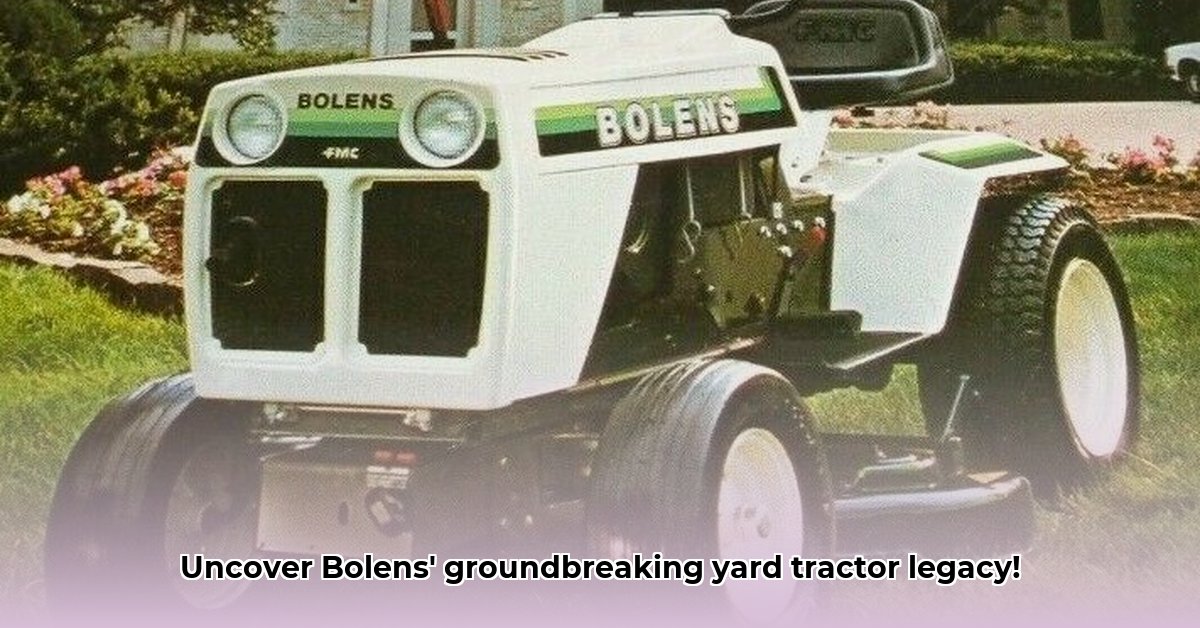
The 1960s saw the rise of the iconic Bolens Husky line, renowned for power and versatility. Models like the 1250 featured a groundbreaking hydrostatic transmission – a system offering smooth, effortless control unlike the cumbersome gear systems prevalent in contemporary tractors. The innovative Fast-Switch Power-Lock Hitch further enhanced the Husky’s appeal by simplifying attachment changes. This combination of user-friendliness and robust performance propelled the Husky to legendary status amongst homeowners. What made the Husky so popular? Its intuitive operation, coupled with its undeniable power, undoubtedly contributed to its enduring legacy.
Design and Collaboration: Form and Function
Bolens recognized the importance of good design, collaborating with renowned industrial designer Brooks Stevens. Stevens infused Bolens tractors with a stylish aesthetic while maintaining functionality and practicality. His designs weren't mere cosmetic enhancements; they improved usability and overall effectiveness. Did this emphasis on both form and function contribute significantly to the brand’s success? The enduring popularity of vintage Bolens models certainly speaks to this design philosophy.
Market Shifts and Acquisitions
The landscape shifted in 1986 with MTD's acquisition of Bolens. While production continued for a time, the brand's unique identity gradually diminished. Around 2010, independent Bolens yard tractor production ceased. This decline was likely multifaceted, encompassing market changes, MTD's strategic decisions, and evolving consumer preferences—a complex issue still debated among enthusiastic collectors.
An Enduring Legacy: The Bolens Spirit
Despite the end of independent production, the Bolens legacy endures. Collectors and enthusiasts cherish these vintage tractors, many of which still function flawlessly after decades of service. This enduring appeal stems from a combination of nostalgia, appreciation for quality craftsmanship, and recognition of a bygone era of robust engineering. These machines are more than just tools; they represent a tangible link to the past.
Key Bolens Models: A Closer Look
The following table provides a glimpse into the diversity of Bolens models:
| Model | Engine Type | Transmission Type | Notable Features | Approximate Year |
|---|---|---|---|---|
| Husky 1050 | Wisconsin Robin | Gear | Simple, reliable workhorse. | 1960s |
| Husky 1250 | Wisconsin Robin | Hydrostatic | Smooth, user-friendly hydrostatic transmission. | 1960s |
| 1000 | Kohler | Manual | Affordable, basic functionality for everyday use. | 1970s |
| GT16 | Tecumseh | Hydrostatic | A later model with enhanced performance and refined design. | 1980s |
The Joys and Challenges of Owning a Classic Bolens
Advantages:
- Durability: Bolens tractors are renowned for their robust construction, capable of decades of service.
- Versatility: Many models offered a wide range of attachments, expanding their functionality.
- Collectibility: Certain models have gained significant value among collectors, appreciating over time.
- Simplicity: Older models often feature simpler mechanics, making them easier to understand and maintain.
Disadvantages:
- Parts Availability: Sourcing replacement parts can be challenging for older models.
- Maintenance: Regular maintenance and occasional repairs are essential to keep them operational.
- Safety Features: Vintage models might lack the advanced safety features of modern tractors.
- Power Output: Compared to modern tractors, they may offer lower power outputs.
Restoring a Vintage Bolens: A Labor of Love
Restoring a classic Bolens is a rewarding endeavor, demanding patience and careful planning. It's a journey that combines mechanical skills, meticulous attention to detail, and a deep appreciation for history. The process demands thorough assessment, meticulous sourcing of parts (both original and reproduction), careful consideration of mechanical and cosmetic restoration, and painstaking reassembly. The result is a beautifully restored machine, a testament to both the tractor's enduring quality and owner's dedication. Online forums and communities – such as those connected to Sam's Bolens – offer invaluable resources.
The Future of Bolens: An Open Question
Will we see a resurgence of the Bolens brand? It remains to be seen. However, the legacy of innovation and quality associated with the name is unquestionable. Bolens tractors significantly contributed to the landscape of lawn care and left an indelible mark on history. Their story is a compelling narrative of ingenuity, adaptation, and the lasting impact of well-engineered machines.